

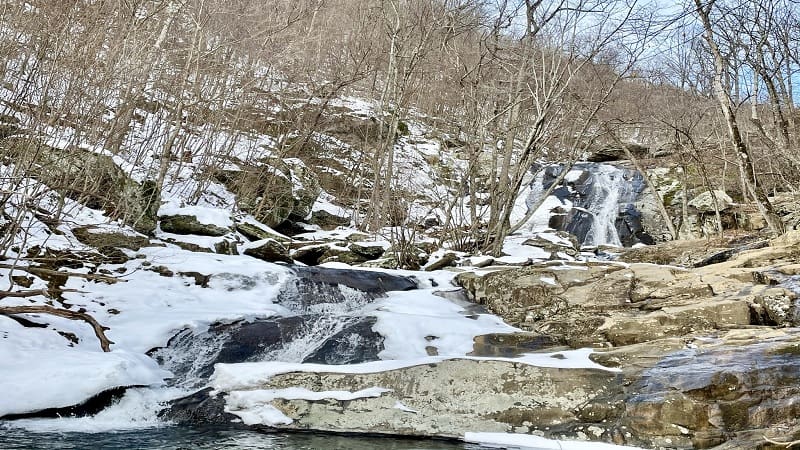

Whiteoak Canyon Trail: A Waterfall Hike in Shenandoah National Park
Whiteoak Canyon Trail is one of the most popular hikes in Shenandoah National Park, Virginia. The trail follows Whiteoak Run through a forested gorge, passing a series of waterfalls, pools, and rocky overlooks. Visitors can choose a shorter out-and-back hike to the lower falls or take on a longer, more strenuous route to see more of the canyon.
What to Expect
The trail descends alongside the stream, with rocky paths, uneven steps, and steep sections. Along the way, hikers encounter several waterfalls. The tallest, Upper Whiteoak Falls, drops about 86 feet. The lower falls are also a popular destination, especially in warmer months when visitors come to enjoy the scenery and cool water.
Trail conditions vary with weather and season. After rain, the stream may run high and the rocks can become slippery. In winter, ice may make the steep sections especially hazardous. Good footwear and careful footing are important throughout the hike.
Choosing a Route
Whiteoak Canyon can be approached from trailheads along Skyline Drive or from the lower trailhead near Weakley Hollow. The upper and lower access points offer different starting elevations and route options, so check a current Shenandoah National Park map before setting out.
- Lower falls: An out-and-back hike from the lower trailhead takes visitors to the lower waterfall area. The route is strenuous in places, with a significant climb on the return.
- Upper falls: Starting near Skyline Drive gives access to the upper section of the canyon. The hike is still steep and rocky, so allow plenty of time.
- Canyon loop: Strong hikers can connect Whiteoak Canyon with the Cedar Run Trail for a longer loop. This route involves substantial elevation change and is best suited to experienced hikers who are prepared for a full day on the trail.
Distances and hiking times depend on the chosen starting point and route. Confirm current trail information and road access with the National Park Service before visiting.
Planning Your Visit
Whiteoak Canyon is especially busy on weekends and during peak fall foliage. Arriving early can make parking easier and provide a quieter start. Shenandoah National Park charges an entrance fee, and access roads or facilities may close temporarily because of weather, maintenance, or seasonal conditions.
Bring water, snacks, and a trail map, and carry out all trash. Stay on marked trails, keep a safe distance from waterfall edges, and avoid climbing on wet rocks. Swimming or wading can be dangerous because currents and submerged rocks may be difficult to see. Check park alerts before your trip, and never rely on cell service in the canyon.
A Memorable Shenandoah Hike
With its shaded forest, rushing water, and cascading falls, Whiteoak Canyon offers a memorable look at Shenandoah’s mountain landscape. Whether you hike to one waterfall or explore a longer route, thoughtful planning and caution help make the experience safer and more enjoyable.
Everything You Need to Know About Hiking the Whiteoak Canyon Trail: FAQs on Length, Difficulty, Trailheads, Waterfalls, Dogs, and Swimming Safety
- How long is the Whiteoak Canyon Trail, and how much time should I allow for the hike?
- How difficult is the Whiteoak Canyon Trail?
- Where are the Whiteoak Canyon Trail trailheads, and where can I park?
- How many waterfalls are along the Whiteoak Canyon Trail?
- Are dogs allowed on the Whiteoak Canyon Trail?
- Can you swim in the pools at Whiteoak Canyon, and is it safe?
How long is the Whiteoak Canyon Trail, and how much time should I allow for the hike?
Whiteoak Canyon Trail’s length depends on your starting point and how far you hike: popular out-and-back routes to the falls are roughly 4–5 miles round trip, while connecting trails can make a much longer loop. Allow about 3–5 hours for a waterfall hike, and longer for the full loop or frequent breaks. The route is steep and rocky, so check current park maps and trail conditions when planning.
How difficult is the Whiteoak Canyon Trail?
Whiteoak Canyon Trail ranges from moderately challenging to strenuous, depending on your route and how far you hike. The trail includes steep climbs, rocky and uneven footing, and significant elevation changes, especially on the return from the lower falls. Shorter out-and-back hikes are possible, but the full canyon loop is a demanding, longer outing best suited to experienced hikers. Wear sturdy shoes, bring water, and use extra caution when rocks are wet or icy.
Where are the Whiteoak Canyon Trail trailheads, and where can I park?
Whiteoak Canyon Trail has two main access points: the upper trailhead is beside the Whiteoak Canyon parking area on Skyline Drive near milepost 42.6, while the lower trailhead is at the end of Weakley Hollow Road (Route 600) near Syria, Virginia. Park only in the designated lots; spaces, especially at the lower trailhead, are limited, so arriving early is a good idea. The Skyline Drive entrance fee applies when entering the national park, and road or parking access can change, so check Shenandoah National Park alerts before you go.
How many waterfalls are along the Whiteoak Canyon Trail?
Whiteoak Canyon is known for six major waterfalls along Whiteoak Run, with cascades ranging from about 35 to 86 feet tall. The falls are spread across the canyon’s upper and lower sections, so the number you’ll see depends on your route and how far you hike.
Are dogs allowed on the Whiteoak Canyon Trail?
Yes, dogs are allowed on the Whiteoak Canyon Trail in Shenandoah National Park, but they must be kept on a leash no longer than 6 feet. The trail is steep and rocky in places, so use caution around slippery rocks and waterfall edges, and bring water for your dog.
Can you swim in the pools at Whiteoak Canyon, and is it safe?
Swimming or wading in some pools at Whiteoak Canyon may be possible, but it can be dangerous and is not risk-free. The water can be cold, currents may be stronger than they look, and slippery rocks, hidden obstacles, and sudden changes in water levels can lead to serious injuries or drowning. Never swim near or climb around waterfall edges, and stay out of the water during high flows or after heavy rain. Check current Shenandoah National Park alerts and follow posted signs; when in doubt, enjoy the pools from shore.


