


Half Dome Trail: A Guide to Yosemite’s Iconic Hike
Half Dome is one of Yosemite National Park’s most recognizable landmarks—and one of its most demanding hikes. The route climbs from Yosemite Valley through forests and granite terrain to the famous cables leading to the summit. Reaching the top rewards prepared hikers with sweeping views of the valley, surrounding peaks, and the Sierra Nevada.
This is a strenuous, full-day hike that requires careful planning. The final climb is steep and exposed, and conditions can change quickly. Hikers should assess their experience, fitness, and comfort with heights before setting out.
Trail Overview
- Distance: Approximately 14 to 16 miles round trip, depending on the route and starting point
- Elevation gain: About 4,800 feet from Yosemite Valley
- Time: Commonly 10 to 14 hours
- Difficulty: Very strenuous
- Starting area: Yosemite Valley, often via the Happy Isles trailhead
Distances and hiking times vary with route choice, trail conditions, and individual pace. The hike is not a casual walk: it includes a long ascent, steep stone steps, exposed terrain, and a demanding return trip.
What the Hike Is Like
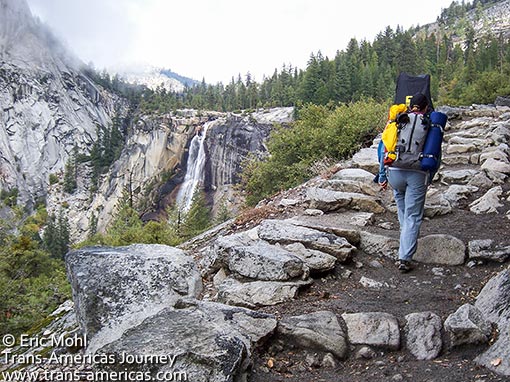
Many hikers begin on the Mist Trail, which climbs past Vernal Fall and Nevada Fall. The trail is steep, and the stone steps near the waterfalls can be slippery, especially when wet. An alternative route using the John Muir Trail is generally longer but avoids some of the Mist Trail’s steepest steps.
Beyond Nevada Fall, the route continues through Little Yosemite Valley and across more open granite terrain. Hikers then climb the Sub Dome, a steep section of stone steps, before reaching the base of Half Dome’s cables.
The cables are the final, famous section of the ascent. They run up the steep granite slope to the summit, where hikers use the cables and metal posts for support. The route is exposed, and the rock can become slick in wet weather. The cables section is not suitable for everyone; turn around if conditions or your comfort level make continuing unsafe.
Permits and the Cables
A permit is required to hike beyond the Sub Dome when the cables are in place. Yosemite National Park generally uses a lottery system for permits, including a preseason lottery and a limited daily lottery. Permit procedures and dates can change, so check the National Park Service’s official Half Dome page before planning your hike.
The cables are typically installed seasonally, often from late spring into fall, but timing depends on weather and trail conditions. When the cables are down, the route remains steep and hazardous. Check current park guidance before going, and do not assume that an open trail means the cables are available or that conditions are safe.
How to Prepare
Preparation is essential for a successful hike. Train with long walks and sustained elevation gain before your trip, and break in sturdy footwear. Start early enough to allow plenty of daylight, while following any current park recommendations about departure times.
- Carry plenty of water and a way to treat or refill it where appropriate.
- Bring high-energy food, sun protection, and layers for changing weather.
- Use gloves for the cables; gloves can improve grip but do not make the climb risk-free.
- Bring a headlamp, even if you expect to finish before dark.
- Check the forecast, trail status, and park alerts before leaving.
- Stay on the established route and follow instructions from park staff.
Water sources and facilities are limited along the route. Carry enough for the full hike, and remember that streams and other natural water sources should be treated before drinking.
Safety on the Trail
Thunderstorms, rain, snow, and strong winds can make the granite especially dangerous. Never climb the cables during a storm or when the rock is wet. If weather deteriorates, turn back rather than pressing on toward the summit.
The hike’s length can also create hazards on the descent. Fatigue, dehydration, and darkness can make the return journey difficult. Set a turnaround time, keep track of your pace, and be willing to abandon the summit if you are running behind or feeling unwell. In an emergency, call 911 when possible; cell service may be limited.
Respecting Yosemite
Help protect the park by packing out all trash, staying on durable surfaces, and giving wildlife plenty of space. Use restrooms before starting and follow park guidance for waste along the route. Leave plants, rocks, and other natural features undisturbed.
Is Half Dome Right for You?
Half Dome is an extraordinary hike, but the summit is not the only worthwhile destination. The route offers impressive views and waterfalls well before the cables, and turning around is always a responsible choice. With permits, sound preparation, favorable conditions, and good judgment, hikers can experience one of Yosemite’s most memorable trails while putting safety first.
9 Reasons to Hike the Half Dome Trail: Epic Views, Iconic Cables, and Unforgettable Adventure
- Offers spectacular Yosemite Valley views
- Features the iconic Half Dome cables
- Passes beautiful waterfalls
- Showcases dramatic granite landscapes
- Provides a rewarding summit experience
- Includes varied trail scenery
- Offers memorable photography opportunities
- Connects hikers with Yosemite’s wilderness
- Creates a challenging outdoor adventure
5 Challenges to Consider Before Hiking the Half Dome Trail
- Extremely strenuous, with a long, steep climb.
- A permit is required to reach the cables.
- The exposed cables section can be intimidating and hazardous.
- Rain, storms, or wet granite can make the route dangerous.
- Crowds and limited daylight can add pressure to the hike.
Offers spectacular Yosemite Valley views
The Half Dome Trail offers spectacular views of Yosemite Valley, with sweeping panoramas of its granite cliffs, forested slopes, and winding river. As hikers climb higher, landmarks such as Yosemite Falls and the surrounding Sierra Nevada peaks come into view, making the challenging ascent especially rewarding.
Features the iconic Half Dome cables
One of the Half Dome Trail’s most memorable features is its iconic cable route to the summit. The steep cables let permitted hikers climb the final granite slope with the aid of handrails, creating a thrilling finish and unforgettable views. This exposed section is physically demanding and can be dangerous, so check current park conditions, use proper equipment, and turn back if the rock is wet or the climb feels unsafe.
Passes beautiful waterfalls
One of the highlights of the Half Dome Trail is its beautiful waterfalls. The route passes Vernal Fall and Nevada Fall, where powerful cascades tumble over granite cliffs and mist cools the air nearby. These scenic stops offer memorable views and a refreshing change of pace on the demanding climb.
Showcases dramatic granite landscapes
The Half Dome Trail showcases Yosemite’s dramatic granite landscapes at every turn. Hikers pass towering cliffs, broad slabs of polished stone, and rugged formations shaped by glaciers and time. As the trail climbs above Yosemite Valley, the views widen to reveal immense granite walls and the distinctive curve of Half Dome itself—a striking reminder of the scale and beauty of the Sierra Nevada.
Provides a rewarding summit experience
Reaching the summit of Half Dome is a deeply rewarding experience, earned through a challenging climb and offering sweeping views of Yosemite Valley and the surrounding Sierra Nevada. After miles of uphill hiking, the vast granite landscape and sense of accomplishment make the summit a memorable highlight.
Includes varied trail scenery
One of the Half Dome Trail’s biggest advantages is its varied scenery. The route winds through shaded forests, climbs past the misty cascades of Vernal and Nevada Falls, and opens onto the expansive granite landscapes of Little Yosemite Valley. As the trail gains elevation, views of Yosemite’s cliffs and surrounding peaks grow more dramatic, making the long hike feel like a series of distinct experiences rather than a single climb.
Offers memorable photography opportunities
Half Dome Trail offers memorable photography opportunities at nearly every turn. From the mist rising around Vernal Fall to the sweeping granite landscapes of the upper trail, hikers can capture Yosemite’s remarkable variety of scenery. At the summit, expansive views across Yosemite Valley and the surrounding peaks create a dramatic backdrop—though it’s important to stay well back from exposed edges and keep photography secondary to safety.
Connects hikers with Yosemite’s wilderness
The Half Dome Trail offers an immersive connection with Yosemite’s wilderness, leading hikers from forested paths and rushing waterfalls to open granite slopes high above Yosemite Valley. Along the way, the changing landscapes, fresh mountain air, and expansive views make the park’s natural beauty feel immediate and unforgettable.
Creates a challenging outdoor adventure
The Half Dome Trail offers a challenging outdoor adventure for hikers ready to test their endurance and determination. Its steep climbs, long distance, and exposed cable section demand careful preparation and steady effort, while the changing scenery—from forested paths to dramatic granite slopes—makes every stage feel rewarding. Reaching the summit can be an unforgettable accomplishment, but the journey itself is a chance to push your limits and experience Yosemite’s wilderness up close.
Extremely strenuous, with a long, steep climb.
The Half Dome Trail is extremely strenuous, with a long, steep climb that can challenge even experienced hikers. The sustained elevation gain, uneven steps, and demanding descent require strong fitness, careful pacing, and plenty of time. Hikers should prepare in advance and be ready to turn back if fatigue or conditions make continuing unsafe.
A permit is required to reach the cables.
One drawback of hiking Half Dome is that reaching the cables requires a permit, which can be difficult to obtain. Permits are limited and typically distributed through a lottery, so planning ahead does not guarantee a spot. This uncertainty can make it harder to schedule the hike, especially for visitors with fixed travel dates. Check the National Park Service website for current permit rules and application dates before making plans.
The exposed cables section can be intimidating and hazardous.
The exposed cables section on the Half Dome Trail can be intimidating and hazardous, even for experienced hikers. The steep granite slope offers little room for error, and wet or crowded conditions can make the ascent especially risky. Hikers who feel uncomfortable or encounter unsafe weather should turn back rather than attempt the climb.
Rain, storms, or wet granite can make the route dangerous.
Rain, thunderstorms, and wet granite can make the Half Dome Trail especially dangerous. The exposed cables section becomes slippery when wet, increasing the risk of losing footing on the steep ascent or descent. Check the forecast before you go, and turn back if rain or storms threaten—never attempt the cables during a storm or on slick rock.
Crowds and limited daylight can add pressure to the hike.
Crowds and limited daylight can make the Half Dome hike feel even more demanding. Long waits at the cables may slow progress, while busy trail sections can make it harder to maintain a steady pace. Because the round trip often takes most of the day, delays can leave hikers racing against sunset. Start early, allow extra time, and be prepared to turn back if you’re behind schedule.


